
Every October, as World Mental Health Day rolls around, organisations around the globe light up their social feeds with supportive graphics and wellness quotes. But behind the banners, a quiet reality persists: burnout, anxiety, and psychological strain remain among the leading threats to performance, retention, and human well-being.
According to the World Health Organisation, an estimated 12 billion working days are lost every year to depression and anxiety alone.
This October, the global focus shifts toward authentic listening under the theme “Lived Experiences Heard: Real Voices, Real Change”. It serves as a reminder that workplace mental health isn’t built on perk packages or monthly webinars; it is built on everyday workplace culture, psychological safety, and meaningful action.
1. The Anatomy of Workplace Stress: What’s Really Going On?
Mental fatigue rarely arrives overnight; it accumulates in the quiet spaces of our daily routines. To address workplace mental health effectively, we must first recognise its primary triggers:
- Role Ambiguity & Loss of Autonomy: Unclear expectations and micromanagement significantly increase stress.
- Always-On Digital Culture: Constant notifications create a state of hyper-arousal, blurring boundaries between recovery and effort.
- Invisible Workload: Operational emotional labour, managing client friction, navigating team dynamics, or carrying operational stress, is rarely captured on a task board.
- Lack of Psychological Safety: When employees fear that expressing vulnerability, asking for help, or admitting mistakes will damage their professional standing, stress compounds silently.
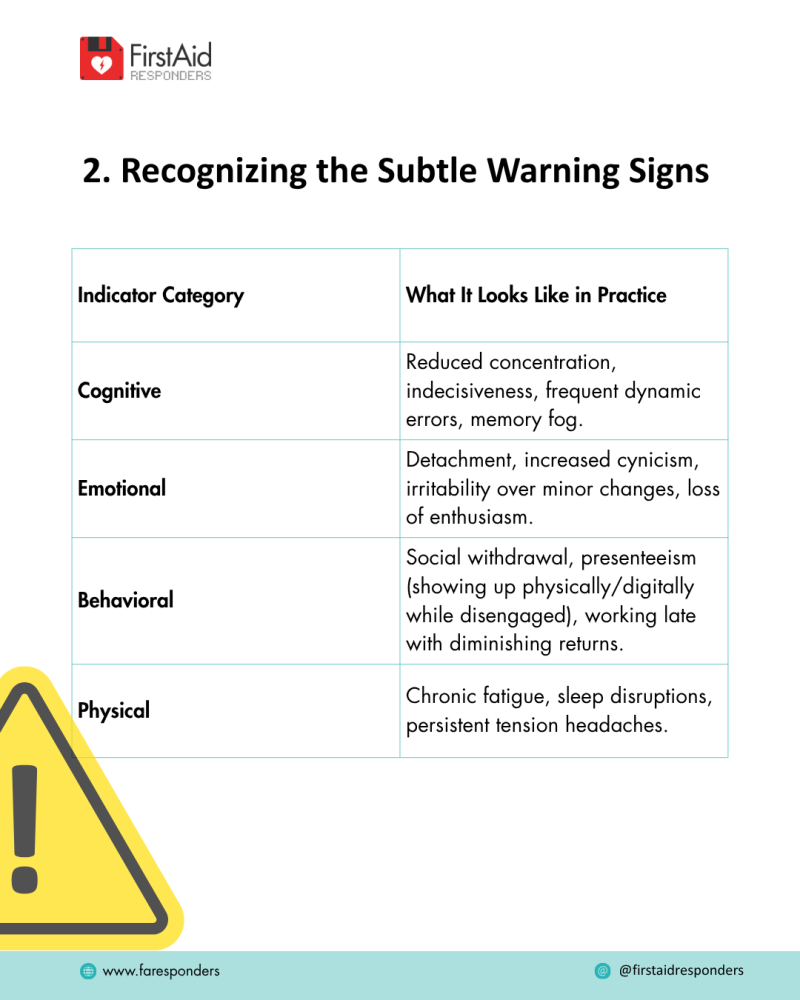
2. Recognising the Subtle Warning Signs
Burnout doesn’t always look like complete exhaustion; often, it looks like subtle shifts in engagement and output.
3. The Framework: Building a Psychologically Safe Workplace
Creating a healthy work environment requires effort from both organizations and individuals. Here is how both sides can foster actionable change:
🏛️ For Leaders & Managers
- Model Healthy Boundaries: If you send late-night emails, your team feels pressure to respond. Schedule messages for working hours and take visible time off.
- Shift from Output Monitoring to Outcome Support: Focus on clarity of deliverables rather than desk time. Ask: “What roadblocks can I remove for you this week?”
- Normalize Checking In: Go beyond “How’s the project going?” Try asking: “On a scale of 1 to 5, how’s your capacity looking right now?”
- Build Active Listening Mechanisms: Create safe channels for team members to share challenges without fear of immediate judgment or evaluation.
👤 For Individual Professionals
- Define Your Digital Sunset: Establish a firm boundary between work and personal time (e.g., turning off work chat notifications 30 minutes post-shift).
- Practice Workstation Micro-Restoration: Integrate 2-minute reset breaks every 90 minutes. Simple visual resets or breathing exercises restore focus faster than continuous scrolling.
- Audit Your Commits: Learn the art of graceful boundary-setting: “I want to give this project the focus it needs. If I take this on, which current priority should I pause?”
- Access Available Support: Make full use of Employee Assistance Programs (EAPs), counseling resources, or mental health days offered by your organization.
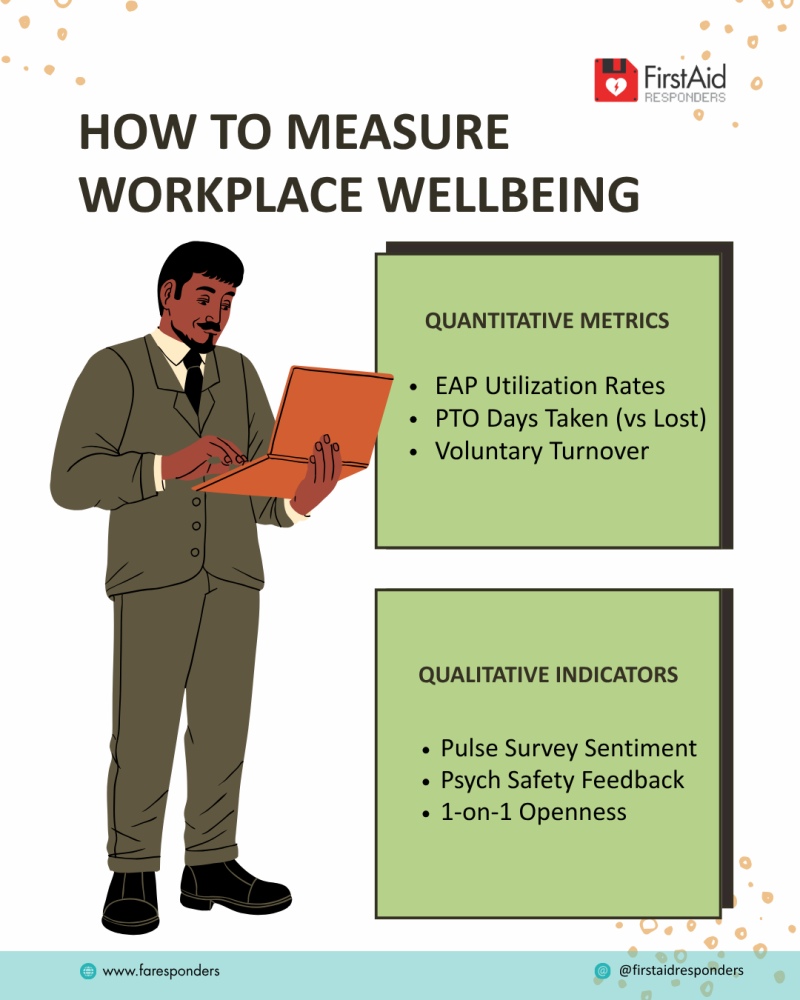
4. Key Metrics: How to Measure Workplace Wellbeing
If you lead a team or initiative, track these key metrics to assess your team’s mental well-being:
Workplace mental health isn’t a destination or a single annual initiative, it is an ongoing operational standard. When we make space for real voices and build systems that protect human capacity, both individuals and organizations thrive.